
Personal emergency link for older people: what it is, types, fees and subsidies
A personal emergency link (emergency call-for-help service) lets an older person contact a call centre for help at the press of a single button: if they fall, feel unwell or face an emergency, pressing the button on a home unit or a wearable device connects them to a 24-hour call centre that answers, assesses the situation and, as needed, contacts family, calls an ambulance or refers support. In Hong Kong the service is provided mainly by non-profit organisations — the Senior Citizen Home Safety Association (SCHSA) has run its 'Personal Emergency Link' since 1996, and other operators are also in the market. Monthly fees depend on the provider and the plan chosen, and eligible elders may even use the service free through government subsidy or a charity scheme.
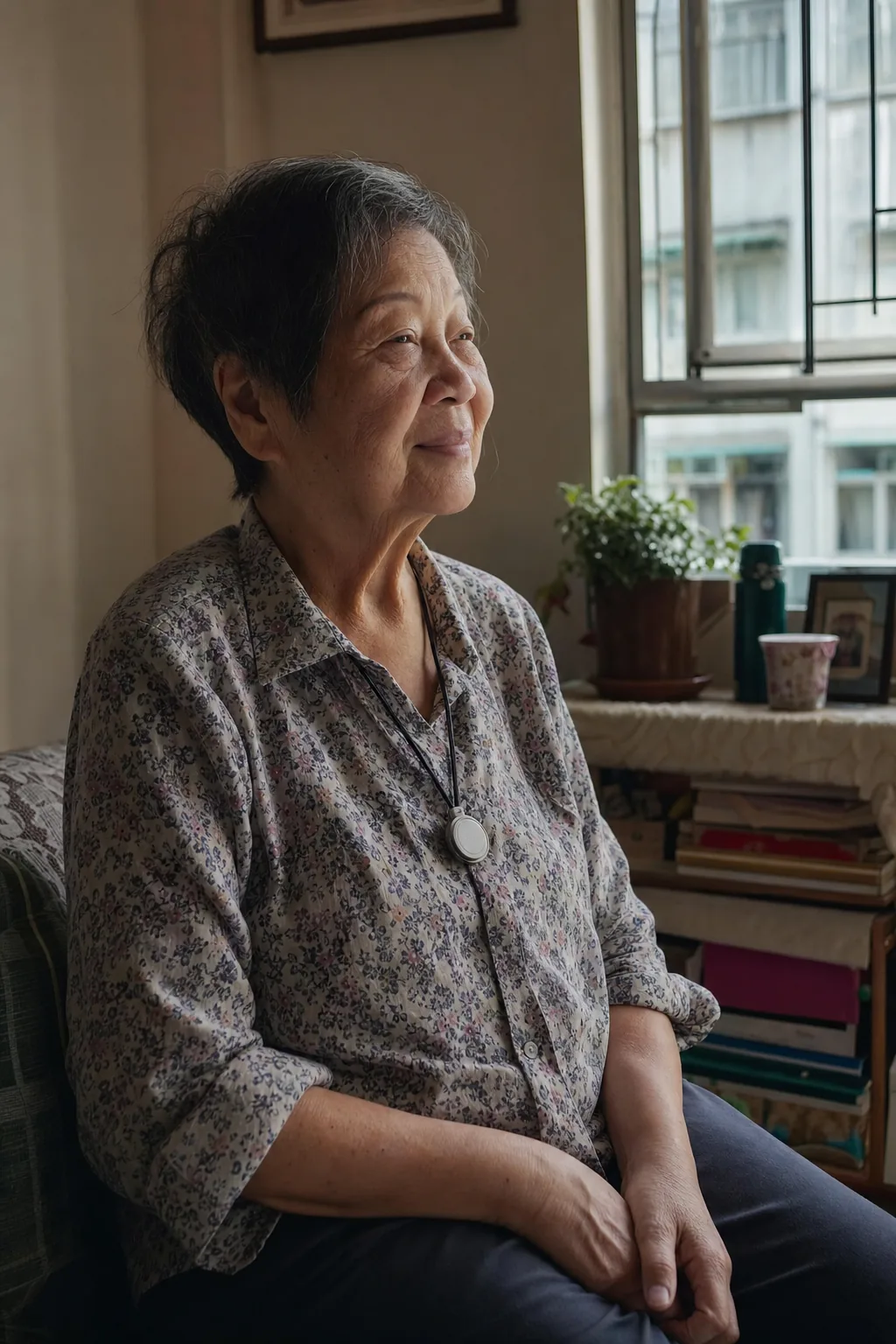
What is a personal emergency link, and who provides it?
A personal emergency link is an emergency call-for-help system: when the older person presses the button, the signal reaches a 24-hour call centre, where staff answer, understand the situation and then reassure, contact family or call an ambulance as needed. In Hong Kong it is provided mainly by non-profit organisations — the Senior Citizen Home Safety Association (SCHSA) has run its 'Personal Emergency Link' since 1996, and other operators are also in the market. The link is often the first line of defence in long-term care arrangements for older people, especially for those who live alone or are left at home during the day.
- Core function: one-press help that connects to a 24-hour call centre.
- Staff reassure, contact family, call an ambulance or refer community support as needed.
- Provided by non-profit organisations; SCHSA has run its 'Personal Emergency Link' since 1996, with other operators also available.
The scope of service, operators and service content are subject to the latest announcements of the respective service organisations and the Social Welfare Department.
What types are there — home unit versus mobile device?
Personal emergency links fall broadly into two types: a fixed home unit and a portable mobile device. The home unit connects to a phone line or network and comes with a pendant or wrist remote button, suiting elders who are home most of the time; the portable mobile device has a built-in mobile network (some with location tracking) so the older person can also call for help when out. Some elders use both, alongside other gerontech products for older people such as fall sensors or emergency-call phones.
| Type | Where it suits | Features |
|---|---|---|
| Home unit | Mostly at home | Connects to phone line or network with a pendant/wrist remote button; covers the home |
| Portable mobile device | Out and about | Built-in mobile network, some with location tracking; can call for help outdoors |
| Both together | Home and outdoors | Coverage at home and outside; fees and devices are counted separately |
The features, coverage and devices of each type are subject to the latest announcements of individual service organisations; actual suitability varies with the older person's condition.
How much is the monthly fee?
The cost of a personal emergency link depends on the provider and the plan chosen, and typically includes a one-off installation or device fee plus a monthly service fee; the fee structures for a home unit and a portable mobile device usually differ, and add-on features (such as location tracking or extra remote buttons) can also affect the price. There is therefore no single 'standard price' — it is best to ask the service organisation for the latest fees and compare contract terms and included services. If you are also considering hiring a domestic helper for elderly care or other arrangements, fold the link's monthly fee into the overall care budget.
- Fees usually have two parts: a one-off installation/device fee plus a monthly service fee.
- Home units and portable devices have different fee structures, and add-on features may cost more.
- There is no single standard price; ask the service organisation for the latest fees and compare contract terms.
This article does not state specific fee amounts; the actual monthly fee and charge items depend on the provider and plan, and are subject to the latest announcements of the respective service organisations.
What subsidies let you use it for free?
Eligible elders mainly have two subsidy routes to use a personal emergency link free of charge. First, the government's 'Community Care Fund – Subsidy Scheme for Emergency Alarm System (Personal Emergency Link) Service' takes referrals through the 18 district 'Care Teams' across Hong Kong; eligible older people and persons with disabilities who are referred can use the service free. Second, SCHSA runs a separate 'Charity Scheme' for those who do not qualify for the government subsidy but face financial hardship: applicants must be aged 65 or above, or under 65 while receiving Disability Allowance and, at the same time, Old Age Living Allowance or CSSA. Both routes have eligibility rules and quotas, so first work out which category you or your parent falls into.
| Subsidy route | Who it is for | Referral / application |
|---|---|---|
| Community Care Fund – Subsidy Scheme for Emergency Alarm System (Personal Emergency Link) Service | Eligible older people and persons-with-disabilities households | Referred through the 18 district 'Care Teams'; eligible people use it free |
| SCHSA 'Charity Scheme' | Those who do not qualify for the government subsidy but face financial hardship (aged 65+, or under 65 receiving Disability Allowance plus Old Age Living Allowance or CSSA) | Apply to SCHSA; eligible people use it free |
The eligibility, referral arrangements and quotas of the subsidy schemes are subject to the latest announcements of the respective service organisations and the Social Welfare Department; meeting one condition does not mean automatic approval.
How do I choose a link for a parent?
When choosing a personal emergency link, first pick the type by the parent's lifestyle: a home unit for those who stay in most of the time, a portable mobile device (or both) for those who go out often. Next compare the call centre's service (whether it is 24-hour, answers in Cantonese, and can contact named family members), the device's ease of use (button size, waterproofing, low-battery alerts), and the fees and contract length. At the same time review the parent's overall care needs — the link is only for emergencies, and daily care still needs family or carer support and respite services to work alongside it.
- Pick the type by lifestyle: home unit for staying in, portable device or both for going out.
- Compare service: whether it is 24-hour, answers in Cantonese, and can contact named family and call an ambulance.
- Watch ease of use and fees: button size, waterproofing, low-battery alerts, monthly fee and contract length.
- Check subsidy eligibility first: eligible people can use it free via the Community Care Fund or a charity scheme.
General education only, not personalised advice; service content and fees are subject to the latest announcements of the respective service organisations.
How do I apply for a personal emergency link?
The application process depends on whether you go the self-funded or subsidised route, but it broadly follows the steps below. If you are applying on behalf of a parent, you can fold the link into the wider plan for your parents' healthcare and care, reviewing medical protection, cash flow and daily care at the same time.
- 1. Assess needs and typeUnderstand the parent's lifestyle and health, decide whether they need a home unit, a portable mobile device or both, and list the features that matter (such as location tracking or Cantonese answering).
- 2. Check subsidy eligibilityFind out whether the parent is eligible: they may be referred through their district 'Care Team' under the government's Community Care Fund subsidy scheme, or ask SCHSA about its 'Charity Scheme'; eligible people can use it free.
- 3. Contact the service organisation to installApply to your chosen service organisation (such as SCHSA or another operator) to arrange installation of a home unit or collection of a portable device, confirming the monthly fee, contract length and call-centre service.
- 4. Test and teach the parent to use itAfter installation, test that the button and call-centre connection work, teach the parent how to press for help, update emergency-contact details, and regularly check the device's battery and operation.
Application channels, subsidy referrals and quotas are subject to the latest announcements of the respective service organisations and the Social Welfare Department.
Sources
The official information cited above can be verified at the sources below; the latest official publication always prevails.
Related reading
Frequently asked questions
What is a personal emergency link, and who provides it?
It is an emergency call-for-help service: at the press of a button an older person connects to a 24-hour call centre. In Hong Kong it is provided mainly by non-profit organisations — SCHSA has run its 'Personal Emergency Link' since 1996, and other operators are also in the market.
What is the difference between a home unit and a mobile device?
A home unit connects to a phone line or network with a pendant or wrist remote button, suiting elders who are mostly at home; a portable mobile device has a built-in mobile network and, in some cases, location tracking, so the older person can call for help when out. Some elders use both.
How much is the monthly fee?
It depends on the provider and the plan chosen, and typically includes a one-off installation/device fee plus a monthly service fee; home units and portable devices have different fee structures, and add-on features may cost more. There is no single standard price — ask the service organisation for the latest fees.
What subsidies let you use it for free?
Eligible elders can be referred free through the government's Community Care Fund subsidy scheme via the 18 district 'Care Teams'; SCHSA also runs a 'Charity Scheme' for those who do not qualify for the government subsidy but face financial hardship. Eligibility is subject to the latest announcements of the respective service organisations and the Social Welfare Department.
What are the eligibility rules for the SCHSA Charity Scheme?
Applicants must be aged 65 or above, or under 65 while receiving Disability Allowance and, at the same time, Old Age Living Allowance or CSSA. Eligible people facing financial hardship can use it free; details and quotas are subject to the latest announcements of SCHSA.
How do I apply for a personal emergency link?
Assess the parent's needs and type, check whether they are eligible for a Community Care Fund referral or a charity scheme, then apply to a service organisation to install a home unit or collect a portable device, and finally test the device and teach the parent to use it. Channels are subject to the latest announcements of the respective service organisations.
Book a retirement planning consultation
An advisor helps you integrate MPF, annuities, insurance and cash flow.